viz.
Visual Rhetoric - Visual Culture - Pedagogy
Site informationRecent Blog Posts
|
HumorRecontextualizing images
Submitted by John Jones on Wed, 2008-02-27 13:05
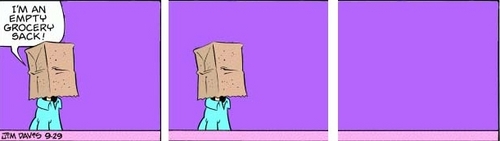
The blog garfield minus garfield contains some wonderful examples of the ways in which images can be recontextualized to create new meanings. According to the site
Garfield the strip is mostly lame; but, by removing the dull main character, the strip is completely transformed. I particularly enjoy the empty panels, and the effect their silence has on the meaning of each strip. The Stuff White People Like problem
Submitted by mkhaupt on Thu, 2008-02-21 12:29
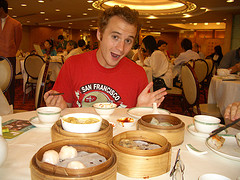
The person pictured below is Christian Lander, one of the authors of the much-discussed blog, Stuff White People Like.
Tags:
God's Eye View
Submitted by mkhaupt on Mon, 2008-01-28 15:53
Back in July, the Creative Review blog posted an entry regarding an art exhibit that imagines scenes from the bible as seen via Google Earth. Tags:
Watch out, Marty McFly
Submitted by John Jones on Mon, 2008-01-21 21:51
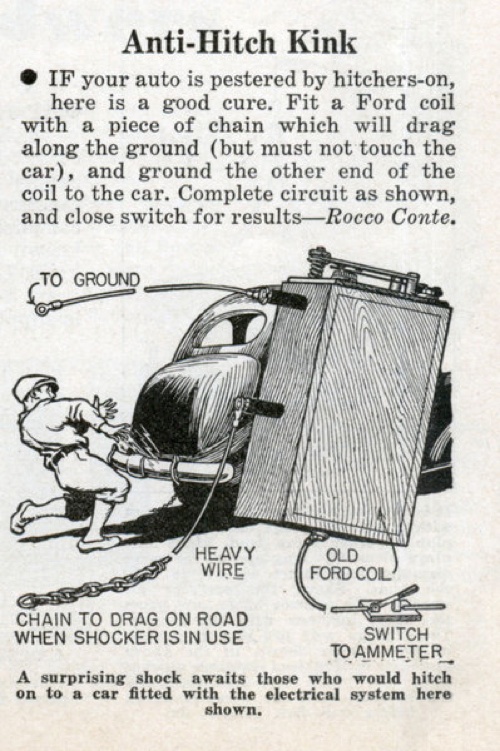
The image below, from the March, 1936, edition of Science And Mechanics, shows how you can rig up your car so that it will shock anyone who tries to hang onto the bumper to hitch a ride.
Such a device would surely have prevented this tragic waste of fertilizer. Tags:
Mustache blog
Submitted by John Jones on Wed, 2007-10-03 18:15
I’ve spent the past hour trying to think of an educational or theoretical reason for posting this link, but I can’t come up with anything. Here it is anyway.
Tags:
Lawnmower People, Part III
Submitted by Nate Kreuter on Mon, 2007-04-23 19:04
With the summer recreation season fast approaching I wanted to put the Lawnmower People to work this week with a public service announcement. If you golf, take stock:
In what is perhaps more of a testament to my simplicity than anything else, I have to admit that these goofy lawnmower people crack me up. I would like to point out though that not all visual texts make arguments. I find when teaching Visual Rhetoric units that students initially want to see ALL images as arguments, whereas images like these really depend on the accompanying text to make any warning/argument clear, at least in the case of more complex warnings. |
|


 Some love the blog, some find it offensive. I fall into the latter category because I think to write about "Stuff White People Like" (which feels grammatically wrong somehow), even satirically, is to exclude non-whites from the things that the titular white people like, like recycling, pricey sandwiches, dogs, kitchen gadgets, and Mos Def (?). While I admire the project of poking fun at the Gen X and Y Brooklyn- and Echo Park-dwelling hipsterati who have more money than actual sense, I do think it's a bit irresponsible to present such a limited view of whiteness and declare it ALL whiteness. What does it mean to the white person who rejects the Prius or can't afford a $300 Kitchenaid waffle iron (or never learned to ride a bicycle as a kid because their family couldn't afford one)? What about the person of color who practices alternative medicine, or lives by the water? Or the white woman who loathed Juno?



Recent comments
2 years 29 weeks ago
2 years 44 weeks ago
2 years 44 weeks ago
2 years 50 weeks ago
3 years 4 weeks ago
3 years 4 weeks ago
3 years 4 weeks ago
3 years 6 weeks ago
3 years 6 weeks ago
3 years 6 weeks ago